
Introduction
If you are planning to create a website or blog, you must have noticed endings like .com, .in, or .org in website names. These endings are called top-level domains, and understanding top level domains types is very important before choosing a domain name. The right domain extension helps build trust, supports branding, and makes your website look professional to visitors.
Whether you are starting a personal blog, a business website, or an online store, the domain extension you choose sends a clear signal to users and search engines. In this guide, we will explain what top-level domains are, their different types, examples, and how to choose the right one—especially for Indian websites.
What Are Top-Level Domains (TLDs)?
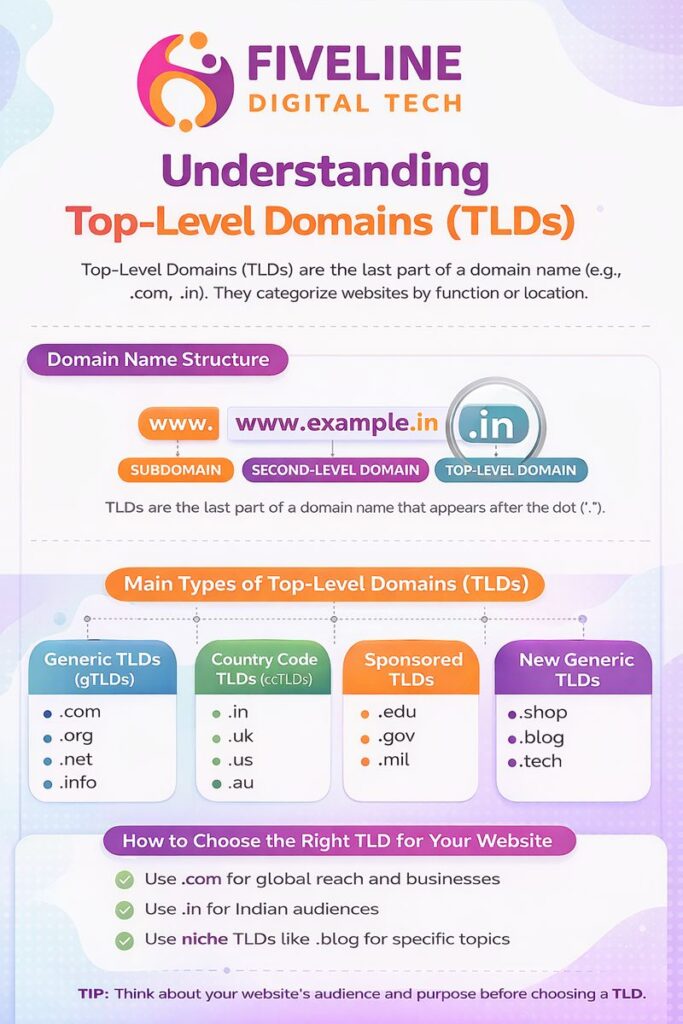
A Top-Level Domain (TLD) is the last part of a domain name that comes after the dot.
For example:
- In example.com,
.comis the TLD - In example.in,
.inis the TLD
TLDs are managed by global internet authorities and help organise the internet into categories such as commercial, country-based, or purpose-specific domains.
In simple words, TLDs tell users what type of website it is or which country it belongs to.
Why Are Top-Level Domains Important?
Choosing the right TLD matters because it impacts:
- User trust and credibility
- Brand identity
- Target audience location
- Search engine visibility (indirectly)
For Indian businesses and bloggers, the correct TLD can make your website look more relevant and trustworthy to local users.
Main Types of Top-Level Domains
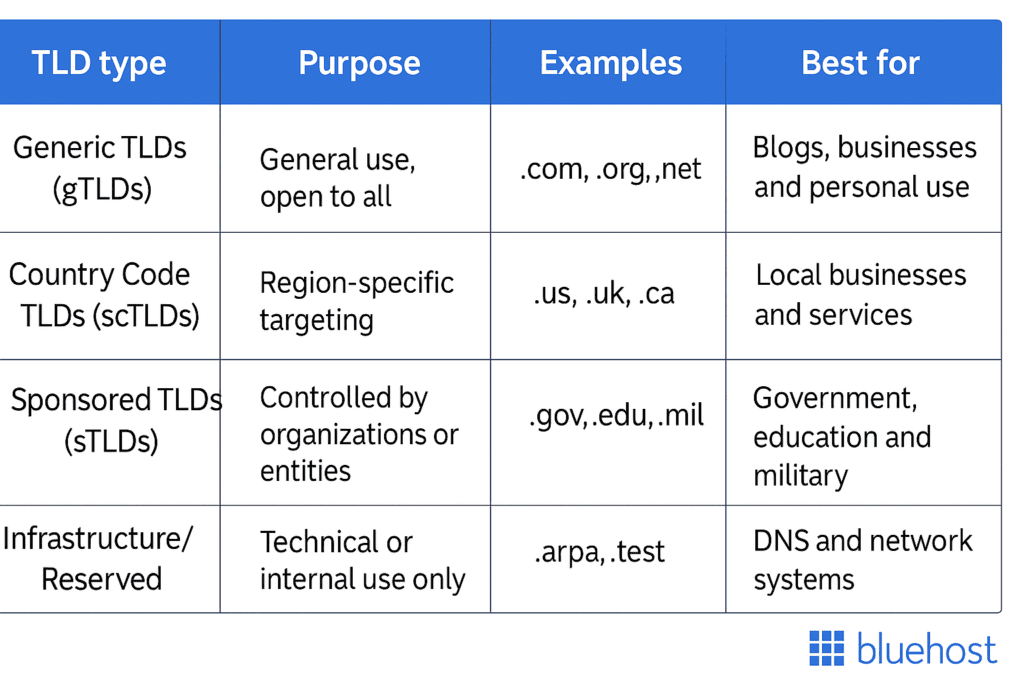
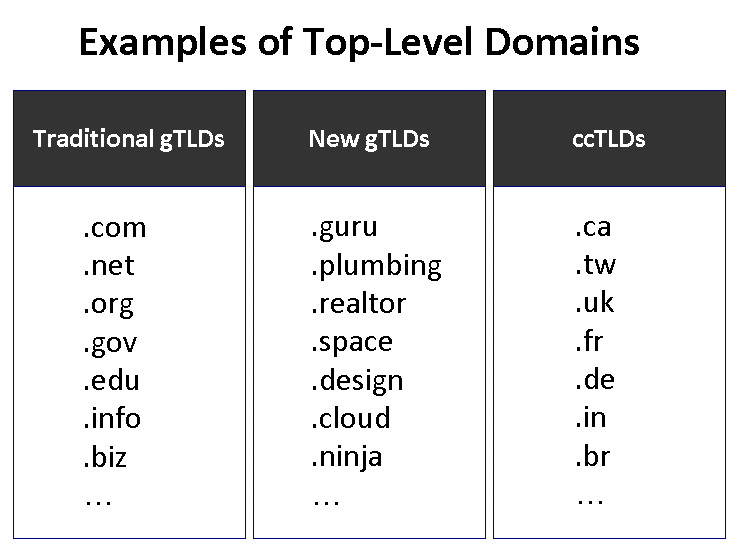
There are several top level domains types, but they mainly fall into four categories. Let’s understand them one by one.
1. Generic Top-Level Domains (gTLDs)
Generic Top-Level Domains are the most commonly used domain extensions worldwide. They are not linked to any specific country.
Popular gTLD Examples
.com– Commercial websites.org– Organisations and NGOs.net– Network-related or tech websites.info– Informational websites
Why Choose gTLDs?
- Easy to remember
- Trusted globally
- Suitable for international audiences
For most Indian bloggers and startups, .com is still the first preference because of its familiarity.
2. Country Code Top-Level Domains (ccTLDs)
Country Code TLDs represent specific countries and usually consist of two letters.
Common ccTLD Examples
.in– India.uk– United Kingdom.us– United States.au– Australia
Benefits of ccTLDs
- Targets local audiences effectively
- Builds trust among country-specific users
- Useful for local SEO strategies
For Indian businesses targeting Indian customers, .in is a strong and relevant choice.
3. Sponsored Top-Level Domains (sTLDs)
Sponsored TLDs are restricted domains meant for specific communities or purposes.
Examples of sTLDs
.edu– Educational institutions.gov– Government websites.mil– Military organisations
These domains require strict verification and are not available for public registration.
4. New Generic Top-Level Domains (New gTLDs)
New gTLDs are modern domain extensions introduced to offer more naming options.
Examples of New gTLDs
.blog.shop.tech.online
Are New gTLDs Good?
Yes, especially if:
- Your brand name is not available with
.com - You want a niche-specific identity
- You are building a modern or creative website
However, they may not be as trusted as .com among traditional users.
Comparison of Top-Level Domains Types
Here’s a simple comparison to help you understand better:
- gTLDs: Best for global reach
- ccTLDs: Ideal for country-specific targeting
- sTLDs: Reserved for authorised institutions
- New gTLDs: Great for branding and niche websites
How to Choose the Right TLD for Your Website
Choosing the right domain extension depends on your website goal.
Ask Yourself These Questions
- Who is my target audience?
- Is my website local or global?
- Do I want trust or creativity?
Simple Recommendations
- Use .com for businesses and blogs
- Use .in if you are targeting Indian users
- Use .blog or .tech for niche branding
Avoid choosing complicated or unfamiliar TLDs if your audience is non-technical.
Do Top-Level Domains Affect SEO?
From an SEO point of view:
- TLDs do not directly affect rankings
- ccTLDs help with local targeting
- User trust and click-through rate matter more
Search engines focus on content quality, user experience, and backlinks rather than just domain extensions.
Common Mistakes to Avoid While Choosing TLDs
- Choosing rare or confusing extensions
- Ignoring audience location
- Selecting long or hard-to-spell domains
A simple, clean, and relevant domain always works better.
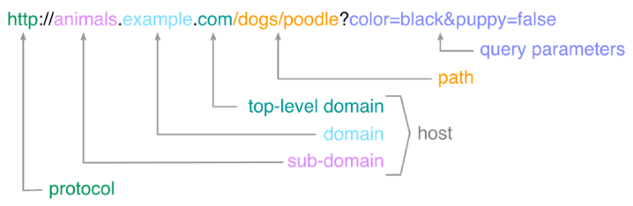
Visual Understanding of Domain Structure
Conclusion
Understanding top-level domain types is essential for anyone starting a website. The right TLD improves trust, branding, and audience connection. While .com .com remains the most popular choice, country-specific and niche domains also have their place when used wisely.
Before buying a domain, think about your audience, purpose, and long-term goals. A small decision today can make a big difference in your website’s future success.
If you are planning to launch a website soon, take time to choose the right domain extension—it’s your digital identity.