
Introduction
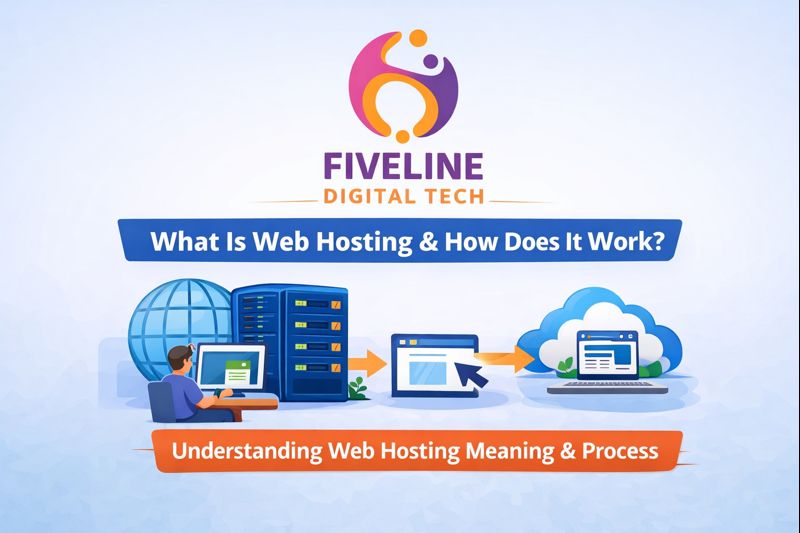
Web hosting meaning becomes clear when you are planning to create a website, and one of the first terms you will come across is web hosting.. Many beginners feel confused about what it actually means and why it is needed. In simple words, the web hosting meaning refers to the service that makes your website accessible on the internet. Without hosting, your website files cannot be seen by anyone online.
Whether you want to start a blog, an online business, or a personal website, understanding web hosting is very important. In this guide, we will explain what web hosting is, how it works, different types of hosting, and how to choose the right one for your needs. Everything is explained in easy English, especially for Indian readers who are just starting out.
What Is Web Hosting?
These files include images, text, videos, and code.
A hosting company provides space on a powerful computer called a server. This server runs 24/7 so that your website is always available to users.
Web Hosting Meaning in Simple Terms
Think of web hosting like renting a shop:
- Your website = shop items
- Hosting server = shop space
- Internet = road that brings visitors
Without renting space, you cannot open the shop. Similarly, without hosting, your website cannot go live.
How Does Web Hosting Work?
When someone types your website name in their browser, a process happens within seconds.
Step-by-Step Explanation
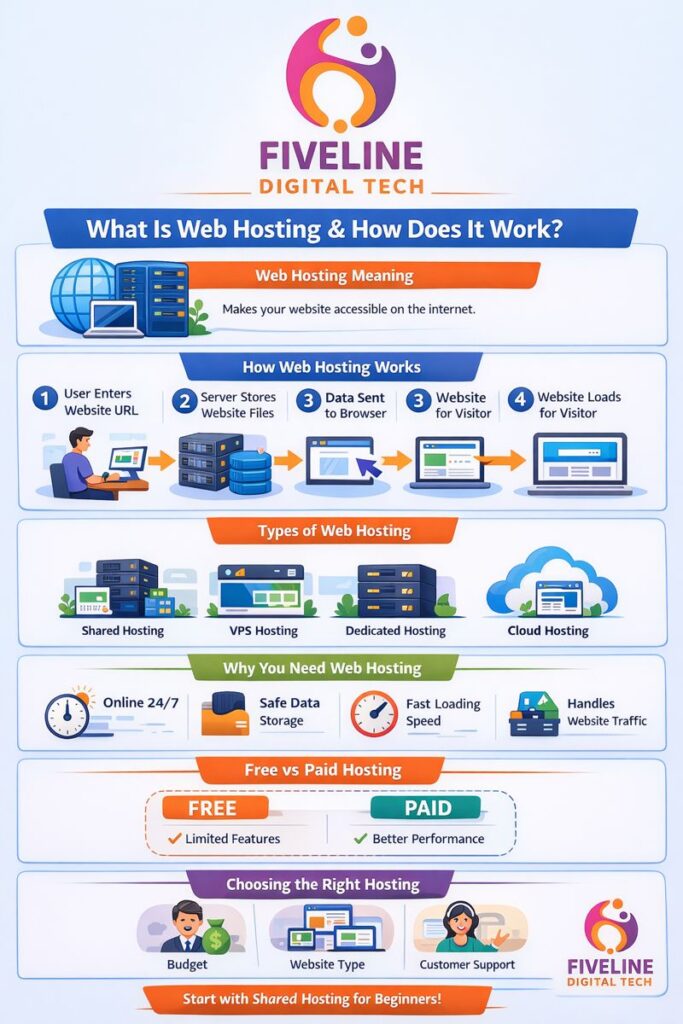
- A user enters your website URL
- The server finds your website files
- The files are sent back to the user’s browser
- The website loads on the screen
All this happens very fast, usually in less than a second.
Why Do You Need Web Hosting?
Every website on the internet needs hosting. Even big brands and small blogs use hosting services.
Here’s why web hosting is important:
- Keeps your website online 24/7
- Stores all website data safely
- Improves website loading speed
- Helps manage traffic and visitors
Without hosting, your website will only exist on your computer.
Types of Web Hosting Explained
Different websites have different needs. That is why hosting comes in many types.
1. Shared Hosting
This is the most common and affordable option.
- Multiple websites share one server
- Best for beginners and small websites
- Low cost, easy to manage
2. VPS Hosting
VPS stands for Virtual Private Server.
- One server divided into virtual parts
- Better performance than shared hosting
- Suitable for growing websites
3. Dedicated Hosting
In this type, you get a full server for yourself.
- High speed and full control
- Expensive option
- Ideal for large businesses
4. Cloud Hosting
Cloud hosting uses multiple servers instead of one.
- High reliability and uptime
- Handles traffic spikes well
- Popular for modern websites
Difference Between Web Hosting and Domain Name
Many beginners think hosting and domain are the same, but they are different.
- Domain name is your website address
Both are needed to run a website properly.
How to Choose the Right Web Hosting in India
Choosing the right hosting depends on your goals and budget.
Important Factors to Consider
- Website type (blog, business, eCommerce)
- Expected traffic
- Budget
- Customer support
- Server location (India or nearby)
Beginner-Friendly Hosting Tips
- Start with shared hosting
- Choose a provider with good support
- Look for easy WordPress installation
- Check renewal prices carefully
Common Web Hosting Terms You Should Know
Here are a few simple terms explained:
- Bandwidth: Amount of data transferred
- Uptime: Time your website stays online
- SSL Certificate: Keeps website secure
- Control Panel: Tool to manage hosting
Understanding these terms helps you make better decisions.
Is Free Web Hosting a Good Idea?
Free hosting sounds tempting, but it has many limits.
Problems with Free Hosting
- Slow speed
- Limited storage
- Ads on your website
- Poor security
For serious projects, paid hosting is always better.
Conclusion
Now you clearly understand the web hosting meaning and how it works. It stores your files, keeps your site online, and helps users access your content anytime.
If you are just starting, shared hosting is a good option. As your website grows, you can upgrade to better plans. Always choose hosting based on your needs, not just price.
If you found this guide helpful, explore our other beginner-friendly articles to learn more about websites and online growth.